
Buying New Construction vs. Resale in the Emerald Coast Area
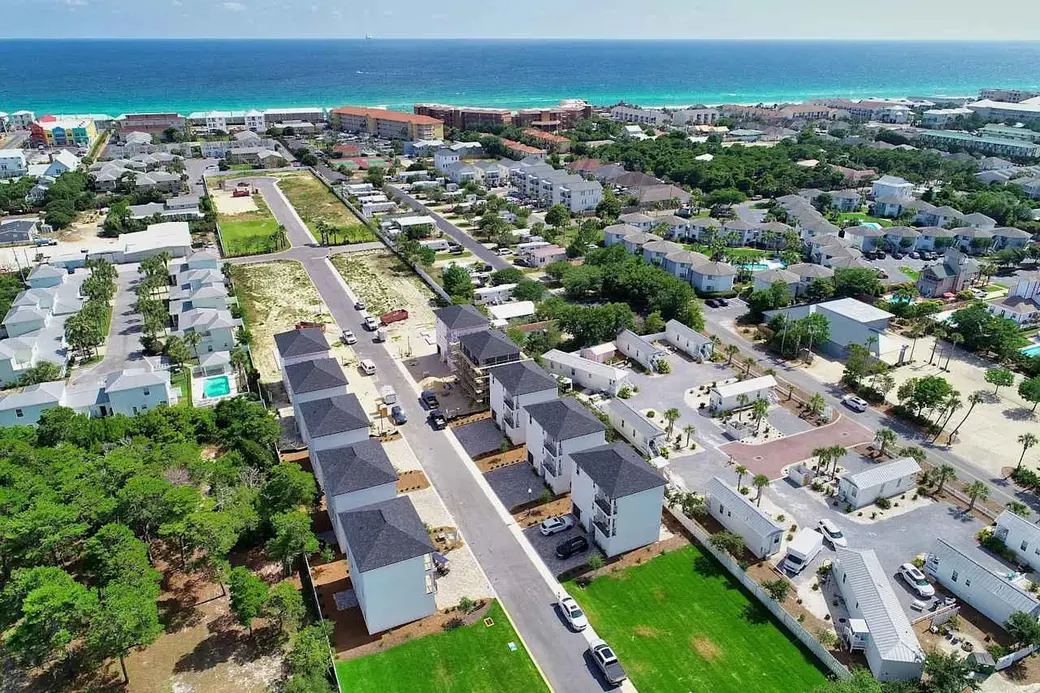
Should you buy a brand-new home or choose an existing resale property on Florida’s Emerald Coast?
New construction can offer modern floor plans, newer systems, builder warranties, and possible financing incentives. A resale home may provide a more established location, mature landscaping, faster closing, and a property you can inspect in its finished condition.
Neither option is automatically better.
The right choice depends on your budget, timeline, commute, preferred location, maintenance tolerance, and how long you plan to own the home.
New Construction vs. Resale: Quick Comparison
| Buying Factor | New Construction | Resale Home |
|---|---|---|
| Condition | New systems and finishes | Condition depends on age, maintenance, and updates |
| Timeline | May be ready now or months from completion | Often able to close sooner |
| Customization | Choices may be available before construction is complete | Changes usually happen after closing |
| Location | Often found in growing or developing areas | More options in established neighborhoods |
| Negotiation | Incentives may focus on financing or upgrades | Price, repairs, credits, and closing terms may be negotiable |
| Inspection | Construction-stage and final inspections may be useful | Standard home inspection and specialized inspections may be needed |
| Maintenance | Typically lower during the first years, but not zero | Older systems may require earlier repairs or replacement |
| Insurance | Newer construction may help, but the exact parcel still matters | Roof age, wiring, plumbing, condition, and location may affect coverage |
| Landscaping | New lawns and young trees | Mature landscaping may already be established |
| Immediate certainty | Final result may still be under construction | You can evaluate the finished home before offering |
1. Compare the Total Cost, Not Just the Base Price
A builder’s advertised starting price may not be the final price of the home you actually want.
The base price may exclude:
-
Lot premiums
-
Structural options
-
Flooring upgrades
-
Cabinet upgrades
-
Appliances
-
Window coverings
-
Fencing
-
Gutters
-
Landscaping additions
-
Screened porches
-
Closing costs
-
HOA initiation fees
-
Community or special-district assessments
A resale home may include appliances, blinds, fencing, landscaping, storage systems, and other improvements that a new-construction buyer would need to purchase separately.
However, resale buyers may also face expenses involving:
-
Roof replacement
-
HVAC systems
-
Water heaters
-
Plumbing
-
Electrical components
-
Windows
-
Appliances
-
Cosmetic updates
-
Insurance-related repairs
The best comparison is not the builder’s base price against the resale home’s list price.
Build a complete estimate showing the likely purchase price, closing costs, immediate improvements, insurance, association expenses, and repairs for each property.
2. Decide How Much Timeline Certainty You Need
Resale homes usually offer a clearer timeline because the house is already complete.
Once the contract, financing, inspection, appraisal, title work, and insurance are handled, the buyer may be able to close within a relatively standard transaction period.
New construction can fall into several categories.
Quick Move-In Home
A quick move-in or completed inventory home may be ready soon. It may provide many of the advantages of new construction without requiring the buyer to wait through the entire building process.
The tradeoff is that the builder may have already selected the finishes and structural options.
Home Under Construction
A home already being built may allow limited choices, depending on how far construction has progressed.
The completion date may change because of weather, materials, permitting, inspections, labor availability, or other construction issues.
To-Be-Built or Custom Home
A to-be-built home may offer more control over the floor plan and finishes, but it generally involves a longer and less predictable timeline.
New-home transactions can involve builder contracts, construction schedules, deposit structures, permits, selections, and change orders that do not appear in a typical resale transaction.
Buyers with a military reporting date, expiring lease, locked interest rate, or home-sale deadline should be especially careful about relying on an estimated completion date.
3. Understand the Contract and Builder Deposit
Builder contracts may be different from the standard forms commonly used for resale purchases.
Before signing, understand:
-
Deposit amount
-
Whether the deposit is refundable
-
Financing deadlines
-
Estimated completion date
-
Builder extension rights
-
Buyer cancellation rights
-
Change-order procedures
-
Upgrade payment requirements
-
Appraisal provisions
-
Inspection rights
-
Warranty terms
-
What happens if the home is not completed on schedule
The Consumer Financial Protection Bureau advises buyers purchasing an unbuilt home to ask exactly when a builder deposit can be returned. It also notes that buyers do not have to use the builder’s associated mortgage lender and have the right to compare financing options.
The Florida Bar recommends careful review of real estate purchase contracts before signing. For homes under construction or recently completed, buyers should also address construction liens, permits, completion of improvements, and issuance of the appropriate Certificate of Occupancy or Completion.
A real estate agent can help explain the transaction and organize questions, but legal interpretation and contract drafting should come from a qualified Florida attorney.
4. Do Not Skip Inspections Because the Home Is New
New does not mean perfect.
Construction can involve multiple crews, subcontractors, suppliers, inspectors, and deadlines. Even a well-built home may have incomplete work, cosmetic defects, installation problems, or items that need adjustment.
Depending on the stage of construction, buyers may consider:
-
Pre-drywall inspection
-
General home inspection
-
Roof inspection
-
HVAC evaluation
-
Sewer-scope inspection
-
Final walkthrough
-
Follow-up inspection before the warranty expires
The contract determines what inspections are allowed and how defects will be handled.
Before closing, confirm:
-
The agreed work is complete
-
Appliances and systems operate
-
Windows and doors function
-
Requested repairs are finished
-
Permits are closed
-
The property has the required occupancy approval
-
The final home matches the contract and selected options
The CFPB recommends using appropriate inspection and financing contingencies when buying a home, while the Florida Bar advises buyers of recently built properties to verify completion and occupancy documentation before closing.
A resale home also needs careful inspection. The difference is that age and previous use may create a different set of concerns.
For an older Emerald Coast resale, buyers may need to pay particular attention to roof age, wind mitigation, wiring, plumbing, HVAC equipment, drainage, previous water intrusion, additions, and insurance eligibility.
5. Compare Builder Incentives With Resale Negotiations
Builders may offer incentives such as:
-
Closing-cost assistance
-
Interest-rate buy-downs
-
Preferred-lender credits
-
Design-center allowances
-
Appliance packages
-
Upgrade credits
-
Reduced lot premiums
-
Price reductions on completed inventory
New-home incentives have remained an important part of the national housing market as builders compete for affordability-conscious buyers.
An incentive can be valuable, but buyers should evaluate the entire transaction.
For example, a lender credit may reduce the money needed at closing while being connected to a different interest rate or loan structure. The CFPB recommends reviewing the Loan Estimate carefully, including the interest rate, lender credits, estimated closing costs, monthly payment, and cash required to close.
Resale sellers may negotiate differently.
Depending on the property and market, a resale seller may consider:
-
Price reductions
-
Repair credits
-
Closing-cost assistance
-
Rate-buy-down contributions
-
Flexible closing dates
-
Personal property
-
Repair completion
-
Home warranties
Do not compare only the incentive headline.
Compare the final purchase price, monthly payment, cash to close, included features, and total cost of the loan.
6. Location May Be the Biggest Difference
Many new-construction communities are built where larger parcels of developable land are available.
On the Emerald Coast, that can place newer neighborhoods farther inland or in growing areas outside established coastal centers. Emerald Group’s local new-construction guidance notes that buyers frequently find newer homes and larger lots a short drive from the Gulf rather than directly beside the beach.
A newer community may provide:
-
Modern amenities
-
New roads and sidewalks
-
Similar-age homes
-
Community pools
-
Open floor plans
-
More inventory within one neighborhood
The tradeoffs may include:
-
Longer commutes
-
Ongoing construction
-
Smaller or less mature landscaping
-
Limited nearby services during early development
-
Future phases that are not yet complete
-
Special assessments or taxing districts
Resale properties may offer more choices in established areas such as Fort Walton Beach, Niceville, Destin, Navarre, and older sections of Santa Rosa Beach.
An established neighborhood may provide:
-
Mature trees
-
Known traffic patterns
-
Existing services
-
Established amenities
-
Larger or less uniform lots
-
Easier access to employment centers
But the home itself may be older or require updates.
Test the commute during the hours you will actually travel. A larger new home may lose some of its appeal when the daily drive is much longer than expected.
7. Review the Community, Not Just the House
With new construction, buyers are purchasing both the home and the future version of the neighborhood.
Ask:
-
How many phases are planned?
-
What remains to be built?
-
Which amenities are complete?
-
Are amenity plans guaranteed in writing?
-
Will the HOA eventually transfer from the developer?
-
Can the builder change future home designs?
-
Are rental restrictions planned?
-
Are nearby parcels approved for additional development?
-
Are there special taxing districts or assessments?
-
Who maintains roads, ponds, drainage, and common areas?
The Florida Bar advises buyers to investigate utilities, special taxing districts, association rules, development promises, flood exposure, drainage, insurance costs, and other expenses before purchasing property.
For a resale home, the buyer can evaluate how the neighborhood currently functions.
Review:
-
HOA financial information
-
Rules and restrictions
-
Recent assessments
-
Common-area condition
-
Neighboring property use
-
Traffic
-
Parking
-
Rental activity
-
Planned nearby development
A completed neighborhood provides more evidence, but buyers should still investigate future changes.
8. Insurance May Favor Newer Features, but It Is Property-Specific
A new home may include a newer roof, updated electrical and plumbing systems, current building standards, and wind-resistant features.
Those characteristics may help during insurance underwriting, but newer construction does not guarantee inexpensive coverage.
Florida insurers may consider:
-
Construction type
-
Year built
-
Roof age and design
-
Property location
-
Square footage
-
Occupancy and use
-
Wind-mitigation features
-
Prior claims
-
Flood exposure
Older homes may also require a four-point inspection addressing the roof, plumbing, electrical, and HVAC systems.
Request property-specific insurance quotes before the contract deadlines expire.
Do not assume:
-
Every new home is inexpensive to insure
-
Every older home is difficult to insure
-
Being inland eliminates flood risk
-
A low-risk flood zone means no flood exposure
FEMA explains that flood maps identify flood zones and base flood elevations, but a property’s broader risk also depends on location, elevation, construction characteristics, development, erosion, and nearby water sources. Most standard homeowners policies do not cover flood damage.
9. Consider Maintenance and Warranty Limits
New construction may reduce the likelihood of replacing major systems immediately.
A builder warranty may also cover certain defects or workmanship issues for a defined period.
However, warranty coverage varies.
Review:
-
What is covered
-
What is excluded
-
How claims must be submitted
-
Response deadlines
-
Whether coverage transfers
-
Required owner maintenance
-
Dispute-resolution procedures
-
Different coverage periods for workmanship, systems, and structural items
The Florida Bar recommends making sure construction contracts clearly address warranty provisions. Florida legal guidance also notes that warranty rights can be limited by written contract language, making careful document review important.
A resale home may not have a builder warranty, but its systems have already been used under real living conditions.
Inspection reports, permits, maintenance records, seller disclosures, and repair history can help the buyer evaluate what may need attention.
Create a repair reserve for either option.
New homes still require maintenance. Resale homes are not automatically money pits.
10. Think About Future Resale Before Choosing
New construction may appeal to future buyers because of its age, design, energy features, and neighborhood amenities.
But buyers should consider what happens when the builder is still selling new homes nearby.
A future resale may compete against:
-
Brand-new inventory
-
Builder incentives
-
Model-home presentation
-
Preferred-lender promotions
-
Newer phases
-
Updated floor plans
A resale home in an established neighborhood may offer a location, lot, view, architectural style, or proximity that is difficult to reproduce.
Its future value may depend on:
-
Property condition
-
Updates
-
Insurance affordability
-
Neighborhood demand
-
Commute
-
Lot quality
-
HOA stability
-
Flood exposure
-
Nearby development
A home should meet your needs today while still making sense to another buyer later.
Which Option May Fit You Better?
New Construction May Be a Better Starting Point When You:
-
Want modern finishes and floor plans
-
Prefer lower initial maintenance
-
Can accept the construction timeline
-
Want community amenities
-
Value builder financing incentives
-
Prefer selecting certain finishes
-
Are comfortable living in a developing area
-
Have reviewed the builder contract and warranty
Resale May Be a Better Starting Point When You:
-
Need a more predictable closing date
-
Want an established location
-
Prefer mature landscaping
-
Want to evaluate the completed home and neighborhood
-
Need to live closer to work or a military installation
-
Want more room to negotiate repairs or terms
-
Prefer architectural variety
-
Are comfortable budgeting for older systems
Questions to Ask Before Choosing
-
What is the complete cost after upgrades and fees?
-
When can I realistically move in?
-
How much deposit is required?
-
Under what conditions is the deposit refundable?
-
What inspections are permitted?
-
What does the builder warranty cover?
-
Are permits and occupancy approvals complete?
-
What incentives are available, and what is their real financial value?
-
What are the insurance and flood costs?
-
How long is the daily commute?
-
What future construction is planned nearby?
-
How will the property compete when I eventually sell?
FAQs
Is new construction always more expensive than resale?
No. The answer depends on the property, location, incentives, upgrades, repairs, insurance, and financing. Compare the complete cost rather than the advertised base price.
Do I need a home inspection on new construction?
A new home can still have incomplete or defective work. Buyers should review their inspection rights and consider appropriate independent inspections and a detailed final walkthrough.
Do I have to use the builder’s lender?
No. Buyers have the right to compare lenders. A builder may connect certain incentives to an affiliated or preferred lender, so compare the Loan Estimates and total financial results carefully.
Is a new home easier to insure in Florida?
It may have features insurers view favorably, such as a newer roof or wind-mitigation components. Coverage and price still depend on the exact property, construction, location, use, flood exposure, and insurance company.
Can I negotiate with a builder?
Possibly. A builder may negotiate price, upgrades, closing costs, financing incentives, or completed inventory differently depending on sales goals and available homes. The builder is not required to accept a proposed change.
Should I use a real estate agent when buying new construction?
Buyer representation can help with community comparisons, contract questions, inspections, financing comparisons, timelines, and future resale considerations. The relationship and compensation should be explained in a written buyer agreement.
Final Thoughts
New construction may provide modern design, newer systems, customization, and attractive incentives.
A resale home may provide an established location, faster closing, mature surroundings, and greater certainty about what you are purchasing.
Before deciding, compare:
-
Total cost
-
Construction or closing timeline
-
Contract and deposit terms
-
Inspection rights
-
Financing and incentives
-
Location and commute
-
Insurance and flood exposure
-
Maintenance and warranty coverage
-
Neighborhood development
-
Future resale competition
Emerald Group, Brokered by LPT Realty helps buyers compare new construction and resale homes across the Emerald Coast based on budget, commute, lifestyle, insurance, condition, and long-term plans.
Explore new-construction hotspots near the beach or compare new construction in Crestview vs. Niceville.
Ready to compare actual properties? Browse current Emerald Coast homes for sale or contact Emerald Group for local buyer guidance.
Categories
- All Blogs (197)
- 30A Communities & Condos (12)
- Communities and Condos on the Emerald Coast (35)
- Destin Communities & Condos (8)
- Fort Walton Beach Communities & Condos (11)
- Home Buying Tips (19)
- Home Selling TIps (11)
- Investment & Rental Strategy (12)
- Local Real Estate Answers (66)
- Military Relocation & VA Buyers (18)
- Navarre Communities & Condos (10)
- Niceville Communities & Condos (4)
- Panama City Beach Communities & Condos (1)
- Pensacola Communities & Condos (1)
- Waterfront & Coastal Homes (7)
Recent Posts





"My job is to find and attract mastery-based agents to the office, protect the culture, and make sure everyone is happy! "